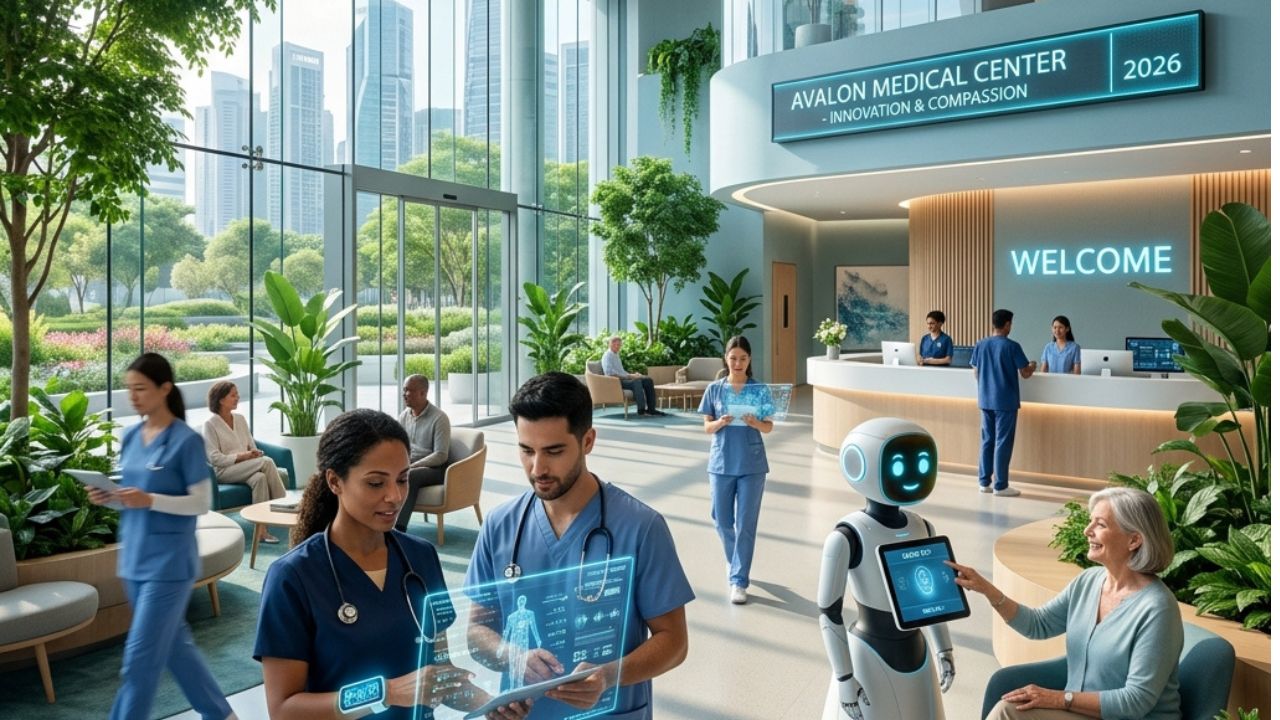
America’s top hospitals for advanced patient care in 2026 are defined by their adoption of AI diagnostics, robotic surgery, gene therapies, and patient-centered care models. Institutions like Mayo Clinic, Cleveland Clinic, and Johns Hopkins consistently lead national rankings due to superior patient outcomes, research output, and technological innovation.
The American healthcare system has never stood still. From the first successful open-heart surgery in 1953 to the widespread use of robotic-assisted procedures today, each decade brings a new frontier. But 2026 marks a particularly significant inflection point—one where artificial intelligence, genomic medicine, and integrated care models are no longer experimental concepts but standard practice at the country’s most elite medical institutions.
This guide identifies America’s best hospitals for advanced patient care in 2026, drawing on patient outcome data, innovation metrics, research output, and expert review. Whether you’re navigating a complex diagnosis or simply want to understand where American medicine is headed, this post gives you the clearest picture available.
The hospitals featured here aren’t just treating disease. They’re redefining what’s possible.
How We Identified America’s Best Hospitals for Advanced Patient Care
Selecting the top hospitals for advanced patient care requires more than counting accolades. Our methodology combined quantitative performance metrics with qualitative assessments gathered from publicly available data and established healthcare rankings.
Data sources included the U.S. News & World Report Best Hospitals rankings, CMS Hospital Compare data, peer-reviewed research publications, and Joint Commission accreditation records. These were cross-referenced against:
- Quantitative metrics: 30-day mortality rates, hospital-acquired infection rates, unplanned readmission rates, and patient safety indicators
- Qualitative factors: patient experience scores (via HCAHPS surveys), staff-to-patient ratios, telehealth integration, and investment in clinical innovation
- Innovation indicators: NIH research funding, active clinical trials, and adoption of emerging technologies such as AI diagnostics and robotic surgery
Geographic diversity and specialization breadth were also considered to ensure the final list reflects the full spectrum of advanced care across America—not just a concentration of East Coast academic medical centers.
The Pacesetters: Top Hospitals for Advanced Patient Care in 2026
1. Mayo Clinic — Rochester, Minnesota
Mayo Clinic has held its position at the top of U.S. News & World Report’s Best Hospitals rankings for several consecutive years, and 2026 is no exception. Headquartered in Rochester, Minnesota (with major campuses in Phoenix and Jacksonville), Mayo Clinic specializes in complex, difficult-to-diagnose conditions that other hospitals routinely refer out.
Key innovations: Mayo’s Center for Individualized Medicine leads the country in applying whole-genome sequencing to clinical care. The clinic has also deployed AI-powered electrocardiogram analysis that can detect early signs of heart failure years before conventional symptoms emerge—a tool developed in-house and now used across thousands of patient visits monthly.
Patient outcomes: Mayo Clinic consistently scores in the top tier for survival rates across oncology, cardiology, and neurology. Its 30-day mortality rates for heart failure and pneumonia rank among the lowest nationally.
Unique programs: The Destination Medical Center initiative, backed by $5.6 billion in public-private investment, is transforming Rochester into a global hub for health and wellness—with Mayo Clinic at the center.
2. Cleveland Clinic — Cleveland, Ohio
Cleveland Clinic’s Heart, Vascular & Thoracic Institute has ranked #1 in the U.S. for cardiac care for 30 consecutive years, according to U.S. News & World Report. That’s not a streak built on reputation alone—it reflects an institution that continuously pushes the boundaries of cardiovascular medicine.
Key innovations: Cleveland Clinic was among the first U.S. hospitals to integrate a fully digital operating room, where surgical teams access real-time patient data, imaging, and AI-guided recommendations without leaving the sterile field. The clinic’s Lerner Research Institute runs over 1,600 active studies annually.
Patient outcomes: Cleveland Clinic reports a 30-day readmission rate for cardiac procedures that consistently falls below the national average, alongside above-average patient satisfaction scores.
Unique programs: The Global Cardiovascular Innovation Center funds early-stage medical device startups, accelerating the pipeline from lab research to clinical application.
3. Johns Hopkins Hospital — Baltimore, Maryland
Few institutions have shaped modern medicine more profoundly than Johns Hopkins Hospital. Founded in 1889, it remains one of the most research-intensive hospitals in the country—receiving more NIH funding than almost any other academic medical center.
Key innovations: Johns Hopkins has been at the forefront of CRISPR-based clinical trials, particularly for sickle cell disease and certain hereditary cancers. Its precision medicine program integrates tumor genomic profiling into standard oncology workflows, meaning treatment plans are tailored at the molecular level.
Patient outcomes: The Sidney Kimmel Comprehensive Cancer Center at Johns Hopkins consistently reports above-average five-year survival rates for several cancer types, including pancreatic cancer—one of the most difficult to treat.
Unique programs: The Johns Hopkins Armstrong Institute for Patient Safety and Quality sets national benchmarks for reducing preventable harm in hospitals. Its Zero Harm initiative has been adopted by healthcare systems across 50 countries.
4. UCSF Medical Center — San Francisco, California
Located in one of the world’s most innovative technology ecosystems, UCSF Medical Center has capitalized on its proximity to Silicon Valley to build one of the most digitally advanced healthcare environments in the country.
Key innovations: UCSF’s partnership with tech companies has produced AI tools that reduce diagnostic errors in radiology, pathology, and emergency triage. The UCSF Health Hub connects startups directly with clinical teams to pilot and validate new healthcare technologies in real-world settings.
Patient outcomes: UCSF ranks in the top tier nationally for cancer, neurology, and kidney disease care, with patient experience scores that consistently exceed national averages.
Unique programs: The UCSF Institute for Global Health Sciences extends the hospital’s advanced care capabilities to underserved populations—both domestically and internationally.
5. Massachusetts General Hospital — Boston, Massachusetts
As Harvard Medical School’s primary teaching hospital, Massachusetts General Hospital (MGH) combines world-class clinical care with one of the most productive research environments in the world. MGH researchers have contributed to discoveries ranging from anesthesia (first demonstrated there in 1846) to modern immunotherapy.
Key innovations: MGH’s Cancer Center has pioneered CAR-T cell therapies for blood cancers and is actively studying their application in solid tumors—a frontier that could expand treatment options for millions of patients. The hospital’s neuroscience division is leading clinical trials in deep brain stimulation for treatment-resistant depression.
Patient outcomes: MGH maintains mortality rates well below the national average across multiple specialties, including neurology, orthopedics, and pulmonology.
Unique programs: The Disparities Solutions Center at MGH specifically addresses racial and ethnic inequities in care delivery—using data to identify gaps and implement systemic solutions.
6. Cedars-Sinai Medical Center — Los Angeles, California
Cedars-Sinai has long been one of the West Coast’s leading academic medical centers, but recent years have seen it emerge as a national leader in healthcare AI and digital innovation.
Key innovations: Cedars-Sinai’s Accelerator program has launched more than 40 health technology companies, many of which now operate within the hospital’s own clinical environment. Its AI-driven early warning system for sepsis—one of the leading causes of hospital deaths—has demonstrably reduced mortality among at-risk patients.
Patient outcomes: The Smidt Heart Institute and the Cedars-Sinai Cancer Center both hold top-tier national rankings, with strong performance in minimally invasive surgical outcomes and oncology survival rates.
Unique programs: Cedars-Sinai’s community benefit programs exceed $700 million annually, reflecting a commitment to healthcare access that extends well beyond its Beverly Hills address.
7. Duke University Hospital — Durham, North Carolina
Duke University Hospital serves as the Southeast’s most comprehensive academic medical center, drawing complex cases from across the region and internationally.
Key innovations: Duke’s Human Vaccine Institute has been central to mRNA vaccine development research, and its oncology program has pioneered CAR-T cell therapy delivery systems that reduce treatment toxicity. Duke was also among the first hospitals to deploy AI-assisted robotic surgery for prostate cancer, achieving lower complication rates than traditional laparoscopic methods.
Patient outcomes: Duke ranks nationally in 11 specialties according to U.S. News & World Report, with particularly strong outcomes in heart surgery and pediatric care.
Unique programs: The Duke Center for Health Equity works to close gaps in care for rural and low-income populations across North Carolina—a model increasingly referenced by policymakers nationwide.
What Are the Key Trends Shaping Advanced Patient Care in 2026?
How is AI changing hospital diagnostics and treatment?
Artificial intelligence has moved from pilot programs to core clinical infrastructure at the nation’s top hospitals. Predictive analytics now flag high-risk patients for early intervention—often before symptoms escalate. At Mayo Clinic, AI-powered ECG analysis has demonstrated the ability to detect asymptomatic left ventricular dysfunction with an accuracy that outperforms traditional clinical assessments.
Precision medicine is the natural extension of this capability. By combining genomic data, electronic health records, and real-time biomarkers, hospitals like Johns Hopkins and UCSF can now design treatment protocols tailored to an individual’s specific biology—not just their diagnosis.
What role does telemedicine play in advanced care delivery?
Telemedicine has evolved from a pandemic-era workaround into a legitimate channel for specialist care. Remote monitoring devices now allow cardiologists at Cleveland Clinic to track post-operative patients from home, intervening before a complication requires readmission. For patients in rural areas without proximity to a major medical center, this represents a fundamental shift in access.
Are robotic surgery and regenerative medicine changing patient outcomes?
Robotic surgery—led by systems like the da Vinci platform and newer AI-guided alternatives—is reducing operative times, blood loss, and post-surgical recovery across dozens of procedure types. Duke and Cedars-Sinai both report measurably lower complication rates in robot-assisted procedures compared to conventional approaches.
Regenerative medicine is advancing in parallel. CRISPR gene editing, once theoretical, is now in active clinical trials at Johns Hopkins and MGH for conditions including sickle cell disease, certain leukemias, and inherited blindness disorders. Stem cell therapies for cardiac repair and spinal cord injury are generating meaningful clinical data for the first time.
How are patient-centered care models changing the hospital experience?
The best hospitals in 2026 treat the patient as an active participant in care, not a passive recipient. Integrated care teams—bringing together physicians, nurses, pharmacists, social workers, and behavioral health specialists—coordinate around a single care plan. Shared decision-making tools give patients clear, understandable explanations of their options and outcomes, improving both satisfaction and adherence.
The Broader Impact: Why Advanced Patient Care Matters Beyond Individual Hospitals
Superior hospital care produces ripple effects throughout the healthcare system. When leading institutions reduce readmission rates and surgical complications, they lower total cost of care—freeing resources for prevention and community health. According to the American Hospital Association, hospital-acquired conditions cost the U.S. healthcare system an estimated $28 billion annually; even incremental improvements at top institutions generate measurable savings.
Research conducted at places like MGH and Johns Hopkins also accelerates the standard of care nationwide. A clinical breakthrough pioneered at an academic medical center in Baltimore or Boston typically reaches community hospitals within five to ten years. The pipeline from discovery to widespread practice is shortening, thanks to digital health infrastructure and accelerated FDA approval pathways.
Health equity remains an unresolved challenge. The hospitals on this list serve some of the most complex cases in the country, but access to these institutions is not uniformly distributed. Programs like the Disparities Solutions Center at MGH and UCSF’s global health initiatives represent meaningful steps, but systemic change requires policy intervention alongside clinical excellence.
How Patients Can Access Advanced Care at America’s Top Hospitals
How should patients research hospitals and specialists for complex conditions?
Start with U.S. News & World Report’s Best Hospitals rankings, filtered by condition or specialty. Cross-reference with CMS Hospital Compare data for mortality and readmission rates. For cancer specifically, the National Cancer Institute designates Comprehensive Cancer Centers—a rigorous designation that signals research depth and clinical capability.
Once you’ve identified potential hospitals, research the specific specialist, not just the institution. A hospital’s overall ranking doesn’t guarantee that every department operates at the same level.
How can patients navigate insurance coverage for advanced treatments?
Advanced treatments—including CAR-T cell therapy, proton beam radiation, and genetic therapies—may require prior authorization and are not always covered under standard plans. Contact your insurer directly before pursuing treatment at an out-of-network facility. Many top hospitals have dedicated financial counselors who can help navigate coverage and identify assistance programs.
Why is getting a second opinion important for complex diagnoses?
Second opinions change management plans in a significant minority of cases. A 2017 study from Mayo Clinic found that as many as 88% of patients who sought a second opinion at a major medical center received a new or refined diagnosis. For serious or rare conditions, a second opinion from a specialist at a nationally ranked institution is not just reasonable—it may be essential.
The Future of Advanced Patient Care Is Already Here
The hospitals featured in this guide are not waiting for the future to arrive. They are building it—one clinical trial, one AI deployment, one patient success story at a time. The convergence of genomics, digital health, and patient-centered care is producing outcomes that would have seemed implausible a decade ago.
For patients, the most powerful tool remains information. Knowing which institutions lead in your specific condition, understanding your coverage options, and advocating for personalized care can meaningfully change your outcome. For healthcare professionals and administrators, these institutions offer a roadmap—proof that excellence at scale is achievable.
American medicine has always advanced through a combination of rigorous science and relentless ambition. The best hospitals of 2026 are proof that standard hasn’t changed.
Frequently Asked Questions
What makes a hospital “advanced” in patient care?
Advanced patient care refers to the use of cutting-edge diagnostics, treatments, and care delivery models that exceed standard clinical practice. This includes AI-assisted diagnostics, robotic surgery, gene therapies, precision medicine, and integrated, patient-centered care teams. Hospitals that invest heavily in research, technology, and clinical innovation are generally considered leaders in advanced care.
Which hospital is ranked #1 in the U.S. for overall care?
Mayo Clinic (Rochester, Minnesota) has consistently ranked #1 in the U.S. News & World Report Best Hospitals Honor Roll. It is recognized for its expertise across multiple specialties, superior patient outcomes, and leadership in precision medicine and AI-powered diagnostics.
Which U.S. hospital is best for cancer treatment?
Multiple institutions rank highly for oncology, including the MD Anderson Cancer Center (Houston), Memorial Sloan Kettering Cancer Center (New York), and the Sidney Kimmel Comprehensive Cancer Center at Johns Hopkins. The best choice depends on cancer type and stage—condition-specific rankings are more informative than overall hospital rankings for oncology decisions.
Are AI and machine learning actually being used in U.S. hospitals today?
Yes. As of 2026, AI is in active clinical use at major U.S. hospitals for tasks including ECG analysis, radiology image interpretation, sepsis prediction, and surgical guidance. Mayo Clinic, Cedars-Sinai, and UCSF Medical Center are among the leaders in deploying clinically validated AI tools within their standard care workflows.
How can patients without insurance access care at top hospitals?
Most top-ranked academic medical centers have financial assistance programs, income-based sliding scale fees, and charity care policies. Patients should contact the hospital’s financial counseling office directly before assuming care is inaccessible. Federally Qualified Health Centers (FQHCs) can also connect uninsured patients to specialty care referral networks.
What is the difference between a teaching hospital and a community hospital for advanced care?
Teaching hospitals are affiliated with medical schools and conduct active research, meaning patients have access to the latest clinical trials and specialized expertise. Community hospitals provide essential care for a broader population but typically have fewer sub-specialists and less access to experimental treatments. For complex or rare conditions, a teaching hospital or academic medical center is generally preferable.